Fatal Frame: Difference between revisions
m Text replacement - "Tecmo" to "Tecmo" |
No edit summary |
||
| (80 intermediate revisions by 4 users not shown) | |||
| Line 1: | Line 1: | ||
<center>''This article is in reference to the first game of the [[Fatal Frame Series]]. <br>For more uses of the term see [[Fatal Frame (Disambiguation)]]''</center><br> | <center>''This article is in reference to the first game of the [[Fatal Frame Series]]. <br>For more uses of the term see [[Fatal Frame (Disambiguation)]]''</center><br> | ||
{{Game | {{Game | ||
| Line 12: | Line 10: | ||
|publisher = Tecmo | |publisher = Tecmo | ||
|distributor = Tecmo & Wanadoo (Euro) | |distributor = Tecmo & Wanadoo (Euro) | ||
|release = [[2001]], [[2002]], & [[2003]]; reissue (Japan) [[2007]]; PSN (US) [[2013]] | |release = [[Publication Timeline#2001|2001]], [[Publication Timeline#2002|2002]], & [[Publication Timeline#2003|2003]]; reissue (Japan) [[Publication Timeline#2007|2007]]; PSN (US) [[Publication Timeline#2013|2013]] | ||
|genre = Survival Horror | |genre = Survival Horror | ||
|modes = Easy, Normal, Hard, Nightmare, Fatal (Xbox version) | |modes = Easy, Normal, Hard, Nightmare, Fatal (Xbox version) | ||
|ratings = Japan - CERO C (15+) | |ratings = Japan - CERO C (15+)<br> USA - ESRB T (Teen)<br> Europe - ELSPA 18+ | ||
|countries = Japan, US, Europe | |countries = Japan, US, Europe | ||
|platforms = [[PlayStation 2]], [[Xbox]] | |platforms = [[PlayStation 2]], [[Xbox]] | ||
}} | }}'''Fatal Frame''' is the first game in the [[Fatal Frame Series]], released for the PS2 and Xbox. | ||
==Storyline== | ==Storyline== | ||
| Line 24: | Line 22: | ||
|quote=I wonder how long it's been... since [[Mafuyu Hinasaki|my brother]] and I... began to see things that other people couldn't see... | |quote=I wonder how long it's been... since [[Mafuyu Hinasaki|my brother]] and I... began to see things that other people couldn't see... | ||
|speaker=Miku Hinasaki | |speaker=Miku Hinasaki | ||
|source=[[Fatal Frame|src]]}}Nine days have passed since [[Mafuyu Hinasaki|Mafuyu]], brother of [[Miku Hinasaki]], had disappeared. | |source=[[Fatal Frame|src]]}} | ||
Nine days have passed since [[Mafuyu Hinasaki|Mafuyu]], brother of [[Miku Hinasaki]], had disappeared. | |||
It all began about a month ago. | It all began about a month ago. | ||
| Line 41: | Line 41: | ||
===PlayStation 2=== | ===PlayStation 2=== | ||
*Japan - December 13th [[2001]] | *Japan - December 13th [[Publication Timeline#2001|2001]] | ||
*US - April 3rd [[2002]] | *South Korea - December 13th 2001 | ||
*US - April 3rd [[Publication Timeline#2002|2002]] | |||
*Europe - August 30th 2002 | *Europe - August 30th 2002 | ||
*Japan re-issue (PlayStation 2 The Best) - August 1st 2002 | *Japan re-issue (PlayStation 2 The Best) - August 1st 2002 | ||
*Japan re-issue (PlayStation 2 The Best) - November 11th [[2007]] | *Japan re-issue (PlayStation 2 The Best) - November 11th [[Publication Timeline#2007|2007]] | ||
*Korea re-issue (Big Hit Series) - June 5th 2008 <ref>[https://prod.danawa.com/info/?pcode=1308238 Product Information]</ref> | |||
===Xbox=== | ===Xbox=== | ||
*Japan - February 6th [[2003]] | *Japan - February 6th [[Publication Timeline#2003|2003]] | ||
*US - November 22nd 2002 | *US - November 22nd 2002 | ||
*Europe - May 2nd 2003 | *Europe - May 2nd 2003 | ||
*Asia - February 6th 2003 | |||
===PSN Store (Digital Download)=== | ===PSN Store (Digital Download)=== | ||
*US - April [[2013]] | *US - April [[Publication Timeline#2013|2013]] | ||
==Main Characters== | ==Main Characters== | ||
[[image:Mikubio.png| | [[image:Mikubio.png|right|100px]]'''[[Miku Hinasaki]]''' (雛咲深紅) (17)<br> | ||
Miku is a high school | Miku is a high-school student with a strong [[sixth sense]]. Miku relies on her brother [[Mafuyu Hinasaki|Mafuyu]], her only living family, and the only person she can talk to about the impossible things they can both see. When Mafuyu leaves for [[Himuro Mansion]] and doesn't return, Miku goes after him. | ||
[[Image: Mafuyubio.png| | [[Image: Mafuyubio.png|right|100px]]'''[[Mafuyu Hinasaki]]''' (雛咲真冬) (21)<br> | ||
Miku's older borther, a journalist. Like Miku, he possesses a strong sixth sense. Since his parents died, Mafuyu has been taking care of his sister. Upon hearing that his mentor, [[Junsei Takamine]], has vanished while doing research at Himuro Mansion, Mafuyu himself goes to investigate, taking with him a special [[Camera Obscura|camera]] his mother left to him and Miku. | |||
==Nights== | ==Nights== | ||
*[[ | *[[Intro: Himuro]] | ||
: | *[[1st Night: The Strangling Ritual]] | ||
*[[Night | *[[2nd Night: Demon Tag]] | ||
: | *[[3rd Night: The Calamity]] | ||
*[[Night | *[[Final Night: Kirie]] | ||
:: | |||
==Development== | |||
::The | The idea for Fatal Frame originated with Makoto Shibata, who had always loved old Japanese houses and wished to create a horror game with a Japanese style. He had even suggested making a new [https://en.wikipedia.org/wiki/Deception_(video_game_series) Deception] game set in a Japanese mansion instead of a Western castle.<ref name="Post Development Interview">''Post-Development/Creators Episode - The Men Who Created Zero'', [[Fatal Frame Fanbook]], p78-82. ([http://fftranslations.atspace.co.uk/fb/fbinterview.html English translation])</ref> He and Keisuke Kikuchi, along with others from the same team that had worked on Deception, eventually started working on a brand new title from scratch.<ref name="Kikuchi interview">''Keisuke Kikuchi Interview'', [http://www.tecmo.co.jp/product/zero/zero_staff_i1.htm Zero Official Site] (Japanese), 2001. Originally published in Hyper Playstation Magazine, 2 September 2001. ([http://fftranslations.atspace.co.uk/ff/kikuchiinterview.html English translation])</ref> | ||
:: | '''The Camera'''<br> | ||
From the beginning, Shibata had the idea of using a camera as a weapon; however, Kikuchi was highly dubious, and the team discussed other possibilities, including talismans, magic arrows, [[Spirit Stone Flashlight|stunning ghosts with a torch]],<ref name="Why Zero Was Born">''Why Zero Was Born'', [http://www.tecmo.co.jp/product/zero/zero_staff_id1.htm Zero Official Site] (Japanese), 21 December 2001. ([http://fftranslations.atspace.co.uk/ff/whyzero.html English translation])</ref> or even filling up a fear gauge to enable a 'shout' mechanic that would drive ghosts back.<ref name="Retro Gamer">''The Making of Project Zero 1-3 by Robert Zak, Retro Gamer Issue 216, January 2021.</ref> However, Kikuchi wished to create an original and terrifying combat experience that he felt other horror games lacked, and eventually he was won over by the idea of the camera, which would force players to confront their fear and see the enemy up close.<ref name="Kikuchi interview"/> The camera also felt appropriate as a weapon against ghosts, because of old superstitions about spirit photography, and photographs stealing people's souls.<ref name="Why Zero Was Born"/> | |||
'''Main characters'''<br> | |||
Shibata and Kikuchi decided to make the main character a girl, feeling that women and children are more in touch with the spirit world than burly men.<ref name="Dev Interview">''Developer Interview'', [[Zero Perfect Guide]], p146-151. ([http://fftranslations.atspace.co.uk/ff/ff1gbinterview.html English translation])</ref> Originally, the developers planned to show Miku and Mafuyu arriving at [[Himuro Mansion]] in a car, but this was deemed too similar to other horror games. (A detailed summary of this unused prologue was included in the [[Fatal Frame Fanbook]] and can be read [http://fftranslations.atspace.co.uk/fb/fbplotff.html here], under the heading "The illusionary introduction.") | |||
'''Creating a scary setting'''<br> | |||
A great deal of attention was paid to details like ghost movements, and the contrast between the beam of the flashlight and the surrounding darkness.<ref name="Why Zero Was Born"/> The sound effects were also carefully crafted to be as atmospheric as possible, and the creators encouraged players to wear headphones while playing. In order to increase the sense of isolation, they also decided to set the game in the 1980s, before mobile phones became common.<ref name="Dev Interview"/> They also set out to give each ghost a distinct story and design, so that the player would feel empathy even with the enemies.<ref name="Kikuchi interview"/> | |||
'''The title'''<br> | |||
During development, the game's codename and tentative title was Project 0.<ref name="Kikuchi interview"/> Finally, the creators settled on 零~zero~, to represent the idea of ghosts as 'beings of nothingness', as well as the player being driven to their limit.<ref>''Zero, the ultimate title'', [http://fftranslations.atspace.co.uk/ff/ff1kikuchi.html Zero Official Site] (Japanese), 2001. ([http://fftranslations.atspace.co.uk/ff/ff1kikuchi.html English translation])</ref> The characters 霊 (ghost) and 零 (zero) can both be read "''rei''", but this was a coincidence, not intentional wordplay.<ref name="Dev Interview"/> | |||
==Regional & Console Differences== | ==Regional & Console Differences== | ||
===Regional=== | ===Regional=== | ||
*[[Miku's Character Design|Miku's character design]] was changed for the Western release. Her hair was a lighter shade of brown, her facial features were slightly altered, and her costume was redesigned. This design is also used in the Xbox version of the game, even in Japan. | |||
*After the game was originally released on the PS2 in all regions, it was ported to the Xbox with several new features and a few other changes that will be detailed below. The Japanese version of the game uses the "Fatal Frame" series name instead of 零~zero~. | |||
*[[Miku's Character Design|Miku's character design]] was | |||
*After the game was originally released on the PS2 in all regions, it was ported to the Xbox with | |||
*Another re-release of the PS2 version from the ''Best'' series was issued for the first three games in anticipation of the [[Fatal Frame IV|fourth game]] for the Wii console. | *Another re-release of the PS2 version from the ''Best'' series was issued for the first three games in anticipation of the [[Fatal Frame IV|fourth game]] for the Wii console. | ||
* | *The names and unlock conditions for the [[Ganguro Costume]] and [[Orange Shirt Costume]] were swapped between the Japanese and global versions. | ||
*Miku's running speed is slightly increased in the US Xbox version of the game.<ref>[https://www.speedrun.com/fatal_frame/thread/unygh Xbox Versions Differences], speedrun.com forums, 18 November 2019.</ref> | |||
===Console=== | ===Console=== | ||
*The Xbox version contains additional notes and diaries, a new "Fatal" difficulty level with | *The Xbox version contains additional notes and diaries, a new "Fatal" difficulty level with an extra boss and an exclusive [[Photograph Ending (FF1)|ending]]. It also includes four new [[Fatal Frame Costumes#Xbox (All Regions)|costumes]] and eleven extra ghosts on the [[Fatal Frame Spirit List#Xbox-only_Ghosts|ghost list]]. The numeric puzzle dials were also changed from Japanese kanji to Roman numbers. | ||
*Only the PS2 version of Fatal Frame will result in a Miku Monster for [[Monster Rancher 4]]. | *Only the PS2 version of Fatal Frame will result in a Miku Monster for [[Cross title content#Monster Rancher 4|Monster Rancher 4]]. | ||
*While the final ranking for the PS2 version is determined by completion time, the Xbox version also takes total score into account. The points allocation during battle was adjusted accordingly, and the Xbox version no longer has a maximum of 9999 points per shot. | |||
'''Compatibility Issues'''<br> | |||
*When the Xbox Version is being played on a Xbox 360, some cutscenes are seen with a black screen and audio still playing.<ref>[http://en.wikipedia.org/wiki/List_of_Xbox_games_compatible_with_Xbox_360]</ref> | |||
*Although it was included in backwards compatibility lists, the PAL Xbox version of the game is '''not''' backwards compatible with the Xbox 360. | |||
==Box Art== | ==Box Art== | ||
<gallery> | <gallery> | ||
Image:Fatal Frame I.jpeg|US, PS2 | Image:Fatal Frame I.jpeg|US, PS2 | ||
Image: | Image:Fatal Frame PS2 NTSC UC Alternate Cover.jpg|US, PS2 | ||
Image:Fatal Frame PS2 Xbox Asia Cover.png|Asia, PS2 | |||
Image:PZ.jpg|EU, PS2 | Image:PZ.jpg|EU, PS2 | ||
Image:Zero.jpg|JP, PS2 | Image:Zero.jpg|JP, PS2 | ||
Image:Zeroxbox.jpg|JP, Xbox | Image:Zero PS2 Asia Edition.jpg|Asia, PS2 | ||
Image:SLPS-73255-F-ALL.jpg|JP, PS2 | |||
Image:SLPS-73405-F-ALL.jpg|JP, PS2 | |||
Image:ZeroKorea.jpg|South Korea, PS2 | |||
Image:SCKA-20127-F-ALL.jpg|South Korea, PS2 | |||
Image:FFxbox.jpg|US, Xbox | |||
Image:PZxbox.jpg|EU, Xbox | |||
Image:FatalFrameXboxAsia.jpg|Asia, Xbox | |||
Image:Zeroxbox.jpg|JP, Xbox | |||
Image:Fatal Frame Korea Cover.jpg|South Korea, Xbox | |||
</gallery> | |||
===Logos=== | |||
<gallery> | |||
File:FF1_JP_Logo.png|Japan | |||
File:FF1_US_Logo.png|US | |||
File:FF1_Europe_Logo.png|Europe | |||
</gallery> | </gallery> | ||
==Promotional Material== | ==Promotional Material== | ||
=== Asia === | |||
*'''Japan''' | |||
<gallery> | |||
Image:Fatal frame special edition lower.jpg|Xbox | |||
Image:Yahoo Listing Image 1.jpg|Announcement Poster | |||
Image:Official Reprint Ad.png|Official Tecmo Advertisement | |||
Image:Fatal Frame Demo.jpg|Tokyo Game Show 2001 Autumn | |||
Image:Trial Version.jpg|PS2 | |||
Image:Fatal Frame Xbox Japan Store Promotional DVD.jpg|Xbox Store DVD | |||
Image:Japan Store Poster2.jpg|Store Poster | |||
Image:Ad of 2nd reprint SLPS-73255.jpg|Advertisement of 2nd Japanese Reprint | |||
Image:TPM Vol 17 Page 12 - 13.jpg|TPM Vol. 17 Page 12 | |||
Image:TPM Vol 18 Page 8 - 9.jpg|TPM Vol. 18 Page 8 | |||
Image:TPM Vol 18 Page 20.jpg|TPM Vol. 18 Page 20 | |||
Image:TPM Vol 18.5 Page 6 - 7.jpg|TPM Vol 18.5 Page 6 | |||
Image:TPM Vol 19 Page 10.jpg|TPM Vol. 19 Page 10 | |||
Image:TPM Vol 19 Page 23.jpg|TPM Vol. 19 Page 23 | |||
Image:TPM Vol 20 Page 27.jpg|TPM Vol. 20 Page 27 | |||
Image:Famitsu Xbox Feb-2003.jpg|Famitsu Xbox Magazine Feb-2003 | |||
Image:Famitsu Xbox Mar-2003.jpg|Famitsu Xbox Magazine Mar-2003 | |||
Image:Weekly Famitsu, 21-Dec-2001 Issue 679.jpg|Weekly Famitsu Magazine Dec-2001 | |||
Image:Weekly Famitsu February 8, 2002 issue.jpg|Weekly Famitsu Magazine Feb 2002 | |||
Image:Game Lab Feb-2002 Magazine.jpg|Game Lab Magazine Feb-2002 | |||
Image:The PlayStation 2 September 7, 2001 Issue Vol.255.jpg|Playstation 2 Magazine Sep-2001 | |||
Image:Playstation 2 Japan Feb-2002 Fatal Frame Perfect Guide Page.jpg|Playstation 2 Magazine Feb-2002 | |||
Image:Famitsu PS2 FF1 PS2 Memory Sticker.jpg|Famitsu PS2 Memory Card Sticker | |||
Image:LPGWBF 3.jpg|Let's Play Games With Best Friend Vol. 3 | |||
Image:LPGWBF 6.jpg|Let's Play Games With Best Friend Vol. 6 | |||
Image:LPGWBF 14.jpg|Let's Play Games With Best Friend Vol. 14 | |||
</gallery> | |||
*'''South Korea''' | |||
<gallery> | <gallery> | ||
Image: | Image:Korean Ad.jpg|Advertisement Poster | ||
Image: | Image:Advertisement Giveaway Korea.jpg|Advertisement Flyer of a giveaway | ||
</gallery> | </gallery> | ||
=== North America === | |||
*'''United States''' | |||
<gallery> | |||
Image:Fatalframe1poster.jpg|Poster | |||
Image:Official US Playstation Magazine Issue 54 (March 2002).jpg|Playstation Magazine Mar-2002 | |||
Image:Official US Playstation Magazine Issue 56 ( May 2002).jpg|Playstation Magazine May-2002 | |||
Image:Registration Card - Front.jpg|Registration Card <br> Front | |||
Image:Registration Card - Back FF Xbox.jpg|Registration Card Xbox <br> Back | |||
</gallery> | |||
=== South America === | |||
*'''Spain''' | |||
<gallery> | |||
Image:Spanish Playstation Magazine.jpg|Magazine | |||
</gallery> | |||
*'''Argentina''' | |||
<gallery> | |||
Image:Next Level - Issue 39 - Aug 2002.jpg|Next Level Issue 39 | |||
Image:Next Level - Issue 36 - Jan 2002.jpg|Next Level Issue 36 | |||
</gallery> | |||
=== Europe === | |||
*'''United Kingdom''' | |||
<gallery> | |||
Image:Retro Gamer Load 216.jpg|Retro Gamer Load 216 | |||
Image:Project Zero Promo Postcard.jpg|Postcard Front | |||
Image:Project Zero Promo Postcard Back.jpg|Postcard Back | |||
</gallery> | |||
*'''France''' | |||
<gallery> | |||
Image:Joypad 122 - Septembre 2002 0000.jpg|Joypad Issue 122 | |||
Image:FS Display 1.jpg|Shop Display | |||
Image:FS Display.jpg|Shop Display | |||
Image:Joypad 122 - Septembre 2002 0007 Ad.jpg|Joypad Issue 122 Page 7 | |||
</gallery> | |||
*'''Italy''' | |||
<gallery> | |||
Image:Italy Demo.jpg|Demo | |||
</gallery> | |||
=== Oceania === | |||
*'''Australia''' | |||
<gallery> | |||
Image:Playstation 2 Australian Magazine May-2002 Page 40.jpg|Playstation 2 Magazine May-2002 | |||
Image:Playstation 2 Australian Magazine Aug-2002 Page 8.jpg|Playstation 2 Magazine Aug-2002 | |||
Image:Playstation 2 Australian Magazine Oct-2002 Page 70.jpg|Playstation 2 Magazine Oct-2002 | |||
Image:Official AUS Playstation 2 Magazine - Issue 009 (2002-12)(Derwent Howard Publishing)(AU) 0078.jpg|Playstation 2 Magazine Dec-2002 | |||
Image:Playstation 2 Australian Magazine May-2004 Page 35 .jpg|Playstation 2 Magazine May-2004 | |||
Image:Hyper Issue 109.jpg|Hyper Magazine Nov-2002 | |||
</gallery> | |||
==Game Inspirations== | ==Game Inspirations== | ||
===Based on a True Story?=== | ===Based on a True Story?=== | ||
::Main article: [[Based on a true story?]] | ::Main article: [[Based on a true story?]] | ||
When Fatal Frame was released to the US | When Fatal Frame was released to the US, the tagline "based on a true story" was added to the cover. This caused a huge debate—that continues to this day—over what events (if any) in the game are actually factual. In a press release, Tecmo said the game was based on two Japanese folk tales.<ref>''Tecmo unveils Fatal Frame's true story'', [https://www.ps2fantasy.com/news/200204/1018460889.php PS2Fantasy], 10 April 2002.</ref> Interestingly, while the other games in the series have also drawn inspiration from Japanese legends and notorious ghost spots, supposed descriptions of the "real" Himuro Mansion are far more common than any references to locations from the other games in the series. | ||
Tecmo unveils Fatal Frame's true story | |||
=== | ===Inspirations=== | ||
* | *"Monster Hunter" by Daijirou Morohoshi - although this manga is not intended to be scary, it makes use of ancient Japanese beliefs about people crossing into the spirit world, which had a strong influence on the lore of Fatal Frame.<ref name="Dev Interview"/> | ||
* | *The Haunting (1963) - the creators refer to an atmosphere of "comfortable darkness",<ref name="Why Zero Was Born"/> when the haunted house goes from a place of terror to a "dreamlike space where the heroine feels at ease".<ref name="Retro Gamer"/> | ||
== | ==Supplemental Material== | ||
* [[Zero Official Strategy Guide]] | *[[Zero Official Strategy Guide]] | ||
* [[Zero Perfect Guide]] | *[[Zero Perfect Guide]] | ||
* [[Zero Novel]] | *[[Zero Novel]] | ||
* [[Fatal Frame Fanbook]] | *[[Fatal Frame Fanbook]] | ||
*[[Zero Sound Horror]] | |||
*[[Fatal Frame II: Premium Fandisc]] | |||
*[[History of "Project Zero" (DVD)]] | |||
*[[Pachislot Zero]] | |||
*[[Screaming Ambulance, Zero Edition]] | |||
==Misc. Info== | ==Misc. Info== | ||
* The game's infamous tag line "based on a true story" was not | *The game's infamous tag line "based on a true story" was not present in the original Japanese version of the game, or in the European version. | ||
*At the time of the original Japanese release, a lottery was held in which one thousand respondents to the survey enclosed in the game case were randomly drawn to receive a pair of Zero headphones.<ref>[http://www.famitsu.com/game/news/1133808_1124.html Famitsu article] (Japanese)</ref> Pictures can be seen [http://nanasenomio.yaekumo.com/zero.html here]. | |||
*On the PS2 version Miku's Camera Obscura is the save icon for the game. | |||
* At the time of the original Japanese release, a lottery was held in which one thousand respondents to the survey enclosed in the game case were randomly drawn to receive a pair of Zero headphones.<ref>[http://www.famitsu.com/game/news/1133808_1124.html Famitsu article] (Japanese)</ref> Pictures can be seen [http://nanasenomio.yaekumo.com/zero.html here]. | |||
* On the PS2 version Miku's Camera Obscura is the save icon for the game | |||
*The game sold 0.14m copies globally.<ref>[http://www.vgchartz.com/game/5073/fatal-frame/ VG Chartz], retrieved October 21 2012.</ref> | *The game sold 0.14m copies globally.<ref>[http://www.vgchartz.com/game/5073/fatal-frame/ VG Chartz], retrieved October 21 2012.</ref> | ||
*The game's theme colours are black, white and red, representing darkness, light, and life/blood.<ref name="Kikuchi interview"/> | |||
==Official Links== | ==Official Links== | ||
http://www.tecmo.co.jp/product/zero/ ( | *[http://www.tecmo.co.jp/product/zero/ Tecmo PS2 site (Japanese)] | ||
http://www.tecmo.co.jp/product/ff/index.htm ( | *[http://www.tecmo.co.jp/product/ff/index.htm Tecmo Xbox site (Japanese)] | ||
http://www.fatalframe.com/ | *[https://web.archive.org/web/20070123203316/http://www.fatalframe.com/ US site] (Currently offline, archived by the Wayback Machine) | ||
==References== | ==References== | ||
| Line 148: | Line 257: | ||
[[Category:Games]] | [[Category:Games]] | ||
[[Category:Fatal Frame]] | [[Category:Fatal Frame]] | ||
Latest revision as of 17:13, 25 June 2025
For more uses of the term see Fatal Frame (Disambiguation)
| Fatal Frame | |

| |
| 零~zero~ Zero ~zero~ Project Zero | |
| Developer(s): | Tecmo |
| Publisher(s): | Tecmo |
| Distributor(s): | Tecmo & Wanadoo (Euro) |
| Release date: | 2001, 2002, & 2003; reissue (Japan) 2007; PSN (US) 2013 |
| Genre: | Survival Horror |
| Game modes: | Easy, Normal, Hard, Nightmare, Fatal (Xbox version) |
| Ratings: | Japan - CERO C (15+) USA - ESRB T (Teen) Europe - ELSPA 18+ |
| Regions: | Japan, US, Europe |
| Platform(s): | PlayStation 2, Xbox |
Fatal Frame is the first game in the Fatal Frame Series, released for the PS2 and Xbox.
Storyline
- "I wonder how long it's been... since my brother and I... began to see things that other people couldn't see..."
- ―Miku Hinasaki src
Nine days have passed since Mafuyu, brother of Miku Hinasaki, had disappeared.
It all began about a month ago.
The media reported that the famous novelist Junsei Takamine disappeared while gathering research for an upcoming novel. Mafuyu, an aspiring journalist, suspected that something was wrong. Why would his mentor simply vanish into thin air? Mafuyu decided to conduct a private search for his friend, with the investigation eventually leading to the grounds of a secluded mansion. The Himuro Mansion stands silent and imposing deep within the forest. It's said that years ago the mansion belonged to a powerful landowner who had absolute control over the area. But now it's a shadow of its former self, dilapidated and desolate...
As Mafuyu searched the mansion, he found scraps of paper left by Junsei and his staff throughout the mansion. The writings recounted a number of ominous events that happened in the mansion's dark past. Eager to find additional clues within the mansion, Mafuyu rushed in and suddenly realized that he wasn't alone...
Miku came to the Himuro mansion in search of her missing brother. But she had no idea what she was getting into...
- - -
- Opening description from the "Fatal Frame" Manual
Release dates
PlayStation 2
- Japan - December 13th 2001
- South Korea - December 13th 2001
- US - April 3rd 2002
- Europe - August 30th 2002
- Japan re-issue (PlayStation 2 The Best) - August 1st 2002
- Japan re-issue (PlayStation 2 The Best) - November 11th 2007
- Korea re-issue (Big Hit Series) - June 5th 2008 [1]
Xbox
- Japan - February 6th 2003
- US - November 22nd 2002
- Europe - May 2nd 2003
- Asia - February 6th 2003
PSN Store (Digital Download)
- US - April 2013
Main Characters

Miku is a high-school student with a strong sixth sense. Miku relies on her brother Mafuyu, her only living family, and the only person she can talk to about the impossible things they can both see. When Mafuyu leaves for Himuro Mansion and doesn't return, Miku goes after him.

Miku's older borther, a journalist. Like Miku, he possesses a strong sixth sense. Since his parents died, Mafuyu has been taking care of his sister. Upon hearing that his mentor, Junsei Takamine, has vanished while doing research at Himuro Mansion, Mafuyu himself goes to investigate, taking with him a special camera his mother left to him and Miku.
Nights
- Intro: Himuro
- 1st Night: The Strangling Ritual
- 2nd Night: Demon Tag
- 3rd Night: The Calamity
- Final Night: Kirie
Development
The idea for Fatal Frame originated with Makoto Shibata, who had always loved old Japanese houses and wished to create a horror game with a Japanese style. He had even suggested making a new Deception game set in a Japanese mansion instead of a Western castle.[2] He and Keisuke Kikuchi, along with others from the same team that had worked on Deception, eventually started working on a brand new title from scratch.[3]
The Camera
From the beginning, Shibata had the idea of using a camera as a weapon; however, Kikuchi was highly dubious, and the team discussed other possibilities, including talismans, magic arrows, stunning ghosts with a torch,[4] or even filling up a fear gauge to enable a 'shout' mechanic that would drive ghosts back.[5] However, Kikuchi wished to create an original and terrifying combat experience that he felt other horror games lacked, and eventually he was won over by the idea of the camera, which would force players to confront their fear and see the enemy up close.[3] The camera also felt appropriate as a weapon against ghosts, because of old superstitions about spirit photography, and photographs stealing people's souls.[4]
Main characters
Shibata and Kikuchi decided to make the main character a girl, feeling that women and children are more in touch with the spirit world than burly men.[6] Originally, the developers planned to show Miku and Mafuyu arriving at Himuro Mansion in a car, but this was deemed too similar to other horror games. (A detailed summary of this unused prologue was included in the Fatal Frame Fanbook and can be read here, under the heading "The illusionary introduction.")
Creating a scary setting
A great deal of attention was paid to details like ghost movements, and the contrast between the beam of the flashlight and the surrounding darkness.[4] The sound effects were also carefully crafted to be as atmospheric as possible, and the creators encouraged players to wear headphones while playing. In order to increase the sense of isolation, they also decided to set the game in the 1980s, before mobile phones became common.[6] They also set out to give each ghost a distinct story and design, so that the player would feel empathy even with the enemies.[3]
The title
During development, the game's codename and tentative title was Project 0.[3] Finally, the creators settled on 零~zero~, to represent the idea of ghosts as 'beings of nothingness', as well as the player being driven to their limit.[7] The characters 霊 (ghost) and 零 (zero) can both be read "rei", but this was a coincidence, not intentional wordplay.[6]
Regional & Console Differences
Regional
- Miku's character design was changed for the Western release. Her hair was a lighter shade of brown, her facial features were slightly altered, and her costume was redesigned. This design is also used in the Xbox version of the game, even in Japan.
- After the game was originally released on the PS2 in all regions, it was ported to the Xbox with several new features and a few other changes that will be detailed below. The Japanese version of the game uses the "Fatal Frame" series name instead of 零~zero~.
- Another re-release of the PS2 version from the Best series was issued for the first three games in anticipation of the fourth game for the Wii console.
- The names and unlock conditions for the Ganguro Costume and Orange Shirt Costume were swapped between the Japanese and global versions.
- Miku's running speed is slightly increased in the US Xbox version of the game.[8]
Console
- The Xbox version contains additional notes and diaries, a new "Fatal" difficulty level with an extra boss and an exclusive ending. It also includes four new costumes and eleven extra ghosts on the ghost list. The numeric puzzle dials were also changed from Japanese kanji to Roman numbers.
- Only the PS2 version of Fatal Frame will result in a Miku Monster for Monster Rancher 4.
- While the final ranking for the PS2 version is determined by completion time, the Xbox version also takes total score into account. The points allocation during battle was adjusted accordingly, and the Xbox version no longer has a maximum of 9999 points per shot.
Compatibility Issues
- When the Xbox Version is being played on a Xbox 360, some cutscenes are seen with a black screen and audio still playing.[9]
- Although it was included in backwards compatibility lists, the PAL Xbox version of the game is not backwards compatible with the Xbox 360.
Box Art
-
 US, PS2
 -
 US, PS2
 -
 Asia, PS2
 -
 EU, PS2
 -
 JP, PS2
 -
 Asia, PS2
 -
 JP, PS2
 -
 JP, PS2
 -
 South Korea, PS2
 -
 South Korea, PS2
 -
 US, Xbox
 -
 EU, Xbox
 -
 Asia, Xbox
 -
 JP, Xbox
 -
 South Korea, Xbox


Logos
-
 Japan
Japan -
 US
US -
 Europe


Promotional Material
Asia
- Japan
-
 Xbox
Xbox -
 Announcement Poster
 -
 Official Tecmo Advertisement
 -
 Tokyo Game Show 2001 Autumn
 -
 PS2
PS2 -
 Xbox Store DVD
 -
 Store Poster
 -
 Advertisement of 2nd Japanese Reprint
 -
 TPM Vol. 17 Page 12
 -
 TPM Vol. 18 Page 8
 -
 TPM Vol. 18 Page 20
 -
 TPM Vol 18.5 Page 6
 -
 TPM Vol. 19 Page 10
 -
 TPM Vol. 19 Page 23
 -
 TPM Vol. 20 Page 27
 -
 Famitsu Xbox Magazine Feb-2003
 -
 Famitsu Xbox Magazine Mar-2003
 -
 Weekly Famitsu Magazine Dec-2001
 -
 Weekly Famitsu Magazine Feb 2002
 -
 Game Lab Magazine Feb-2002
 -
 Playstation 2 Magazine Sep-2001
 -
 Playstation 2 Magazine Feb-2002
 -
 Famitsu PS2 Memory Card Sticker
 -
 Let's Play Games With Best Friend Vol. 3
 -
 Let's Play Games With Best Friend Vol. 6
 -
 Let's Play Games With Best Friend Vol. 14


- South Korea
-
 Advertisement Poster
 -
 Advertisement Flyer of a giveaway


North America
- United States
-
 Poster
 -
 Playstation Magazine Mar-2002
 -
 Playstation Magazine May-2002
 -
 Registration Card
Front -
 Registration Card Xbox
Back

.jpg)
.jpg)


South America
- Spain
-
 Magazine

- Argentina
-
 Next Level Issue 39
 -
 Next Level Issue 36


Europe
- United Kingdom
-
 Retro Gamer Load 216
 -
 Postcard Front
 -
 Postcard Back


- France
-
 Joypad Issue 122
 -
 Shop Display
 -
 Shop Display
 -
 Joypad Issue 122 Page 7


- Italy
-
 Demo
Demo

Oceania
- Australia
-
 Playstation 2 Magazine May-2002
 -
 Playstation 2 Magazine Aug-2002
 -
 Playstation 2 Magazine Oct-2002
 -
 Playstation 2 Magazine Dec-2002
 -
 Playstation 2 Magazine May-2004
 -
 Hyper Magazine Nov-2002


(Derwent_Howard_Publishing)(AU)_0078.jpg)


Game Inspirations
Based on a True Story?
- Main article: Based on a true story?
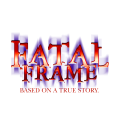
When Fatal Frame was released to the US, the tagline "based on a true story" was added to the cover. This caused a huge debate—that continues to this day—over what events (if any) in the game are actually factual. In a press release, Tecmo said the game was based on two Japanese folk tales.[10] Interestingly, while the other games in the series have also drawn inspiration from Japanese legends and notorious ghost spots, supposed descriptions of the "real" Himuro Mansion are far more common than any references to locations from the other games in the series.
Inspirations
- "Monster Hunter" by Daijirou Morohoshi - although this manga is not intended to be scary, it makes use of ancient Japanese beliefs about people crossing into the spirit world, which had a strong influence on the lore of Fatal Frame.[6]
- The Haunting (1963) - the creators refer to an atmosphere of "comfortable darkness",[4] when the haunted house goes from a place of terror to a "dreamlike space where the heroine feels at ease".[5]
Supplemental Material
- Zero Official Strategy Guide
- Zero Perfect Guide
- Zero Novel
- Fatal Frame Fanbook
- Zero Sound Horror
- Fatal Frame II: Premium Fandisc
- History of "Project Zero" (DVD)
- Pachislot Zero
- Screaming Ambulance, Zero Edition
Misc. Info
- The game's infamous tag line "based on a true story" was not present in the original Japanese version of the game, or in the European version.
- At the time of the original Japanese release, a lottery was held in which one thousand respondents to the survey enclosed in the game case were randomly drawn to receive a pair of Zero headphones.[11] Pictures can be seen here.
- On the PS2 version Miku's Camera Obscura is the save icon for the game.
- The game sold 0.14m copies globally.[12]
- The game's theme colours are black, white and red, representing darkness, light, and life/blood.[3]
Official Links
- Tecmo PS2 site (Japanese)
- Tecmo Xbox site (Japanese)
- US site (Currently offline, archived by the Wayback Machine)
References
- ↑ Product Information
- ↑ Post-Development/Creators Episode - The Men Who Created Zero, Fatal Frame Fanbook, p78-82. (English translation)
- ↑ 3.0 3.1 3.2 3.3 3.4 Keisuke Kikuchi Interview, Zero Official Site (Japanese), 2001. Originally published in Hyper Playstation Magazine, 2 September 2001. (English translation)
- ↑ 4.0 4.1 4.2 4.3 Why Zero Was Born, Zero Official Site (Japanese), 21 December 2001. (English translation)
- ↑ 5.0 5.1 The Making of Project Zero 1-3 by Robert Zak, Retro Gamer Issue 216, January 2021.
- ↑ 6.0 6.1 6.2 6.3 Developer Interview, Zero Perfect Guide, p146-151. (English translation)
- ↑ Zero, the ultimate title, Zero Official Site (Japanese), 2001. (English translation)
- ↑ Xbox Versions Differences, speedrun.com forums, 18 November 2019.
- ↑ [1]
- ↑ Tecmo unveils Fatal Frame's true story, PS2Fantasy, 10 April 2002.
- ↑ Famitsu article (Japanese)
- ↑ VG Chartz, retrieved October 21 2012.